Masson-Angers · Gatineau
Masson-Angers, on the Lièvre at Gatineau's eastern edge
Masson-Angers has its own storm memory: a tornado crossed the eastern half of Masson on 27 June 1978, forty years before the one that hit Mont-Bleu. Most window work here is ordinary, but a sector with that history has good reason to know what to do after strong wind.
We're a free referral service: we pass your request to an independent local glass professional who does that job, and you'll hear back from us either way.
At a glance
- Sector
- Eastern Gatineau, near the Rivière du Lièvre
- Roots
- Masson (1897) and Angers (1915); part of Gatineau from 2002
- Storm record
- An F2 tornado through Masson in June 1978
- Common jobs
- Broken glass, thermos, patio doors, screens
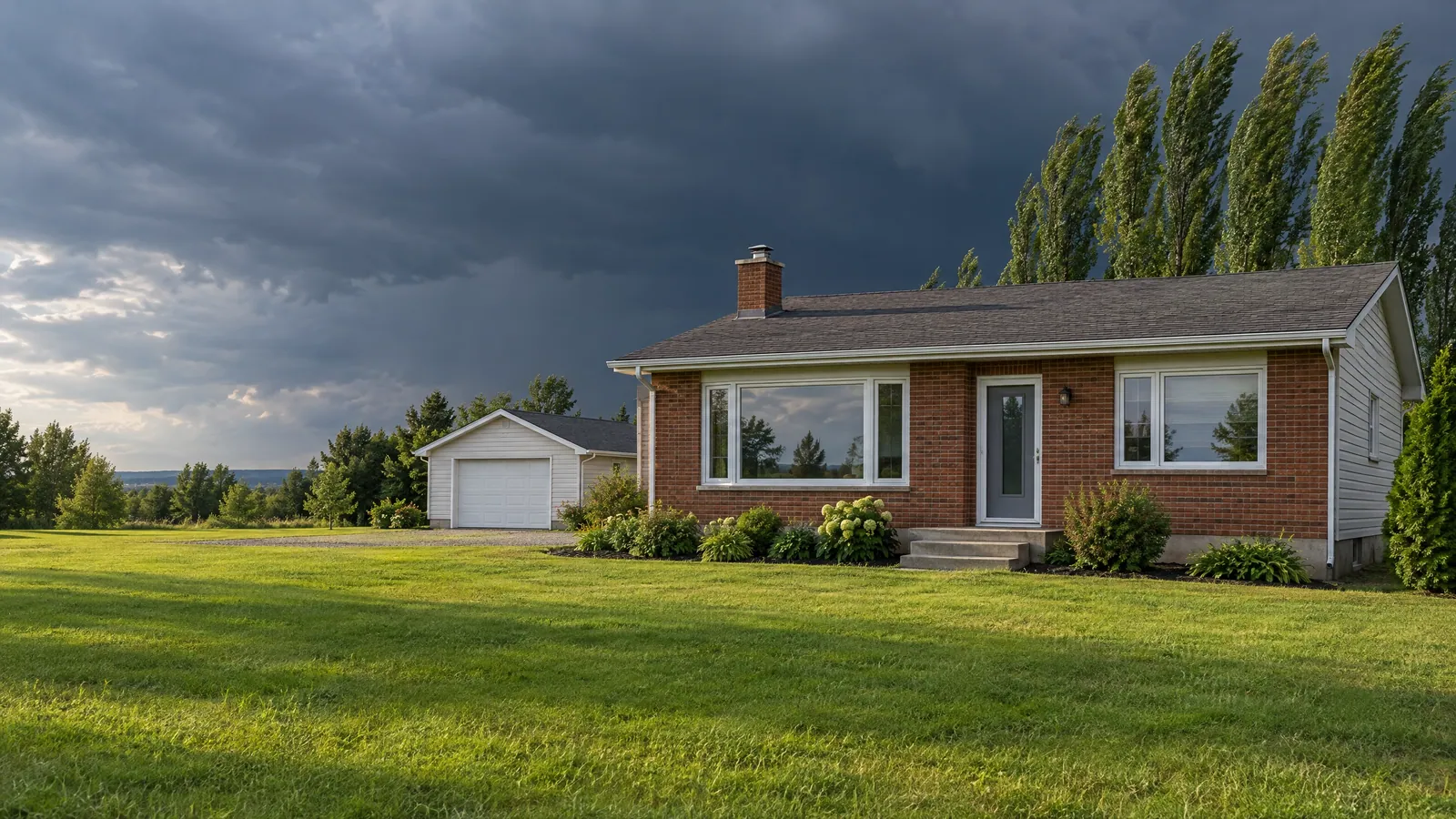
Masson (1897) and Angers (1915)
Masson was created in 1897 and Angers in 1915, two communities near the Lièvre that later shared one name. In 2002 Masson-Angers became one of the five towns merged into Gatineau, which is what matters for your windows: the City's permit rules apply here, as in neighbouring Buckingham. Same-opening replacements are often exempt below the City's cost threshold; closing or adding an opening is not. Confirm with the City through URBAIN or 311.
The 1978 tornado and strong winds
On 27 June 1978, an F2 tornado swept through the eastern half of Masson and caused extensive damage. A storm like that is rare, but wind still breaks glass, and the order of what to do doesn't change:
- Make it safe. Keep people and pets away, wear gloves and shoes, and leave loose shards in the frame for the pro.
- Photograph it before anything is moved, inside and out, for your insurer.
- Cover the opening with plywood or heavy plastic to keep weather out for now.
- Then replace it properly. A plain pane can sometimes be cut locally; a thermos or a tempered patio-door panel is made to size.
The storm damage page covers insurance and what can wait.
Riverside properties: basement windows and doors after high water
Spring high water is a recurring event in Gatineau, and the City keeps an interactive map of at-risk zones. If your property is near the river, look it up.
After water has reached a basement window or a door, don't judge it by the glass alone: water can sit in the frame and work into the thermos seal. If you plan to claim, let your insurer see the damage before anything is replaced; a pro can then say whether the frame can be reglazed.
Rénoclimat – Adaptation
Quebec's Rénoclimat program already helps with full-frame ENERGY STAR door and window replacements, though not glass-only swaps. Quebec says a new stream, Rénoclimat – Adaptation, opens on 1 October 2026 to help homeowners adapt their homes to flooding. What it will cover, including whether basement windows or doors qualify, is for the program to confirm, so read its terms before planning work around it. Our window subsidies guide explains how the programs fit together.
Everyday repairs
- Fogged thermos: fog between the panes means the seal has failed; the thermos, the sealed glass unit, can usually be replaced without a new frame.
- Broken glass: a cracked or shattered pane replaced once the opening is safe and covered.
- Patio doors: worn rollers, a lock that won't catch or tired weatherstripping, fixed before anyone prices a new door.
Masson-Angers questions
The wind broke a window: what should I do first?
Make the area safe: keep people and pets away and wear gloves and shoes. Photograph the damage inside and out, then cover the opening with plywood or heavy plastic. Call your insurer if you plan to claim. Send us a photo and your street and we'll look for a pro.
What should I check on windows and doors after a strong windstorm?
Once it's safe, walk around outside. Look for cracked or chipped glass, a thermos that has suddenly fogged, torn screens, and patio or storm doors that no longer close or latch. Inside, check sills for water. Photograph any damage before you clean up, and don't leave small cracks for later.
Does Rénoclimat – Adaptation cover basement windows?
That isn't confirmed yet. Quebec says the Adaptation stream opens on 1 October 2026 to help homeowners adapt to flooding, but the list of eligible work is the program's to publish. Check its official page before planning a basement window job around it, and ask for quotes that price each opening on its own line. Our subsidies guide explains how Rénoclimat works.
Why is my window well filling with water?
Usually because water isn't draining away from it. The drain at the bottom of the well may be blocked or missing, the ground may slope toward the house, or a downspout may empty nearby. A window can't hold back standing water for long, so deal with the drainage first; a clear well cover also keeps rain and snow out. If water has come through, have the frame checked.
Can a basement window be made more flood-resistant?
Up to a point. A pro can replace a tired basement window with a tighter unit, reseal the frame to the foundation and fit a well cover. None of that makes a window watertight against rising water, and drainage around the well matters as much as the window itself. If your street is on the City's flood-zone map, ask your insurer and the program what they recommend first.